

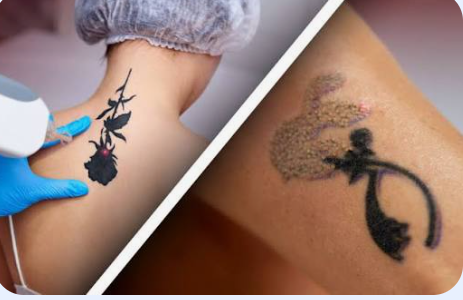
Understanding the Science of Laser Tattoo Removal
At the heart of modern ink clearance is a principle known as selective photothermolysis. Unlike older, ablative methods—such as dermabrasion, surgical excision, or chemical peels—which essentially removed the top layers of the skin to reach the ink, selective photothermolysis allows us to target the pigment while leaving the surrounding skin largely untouched.
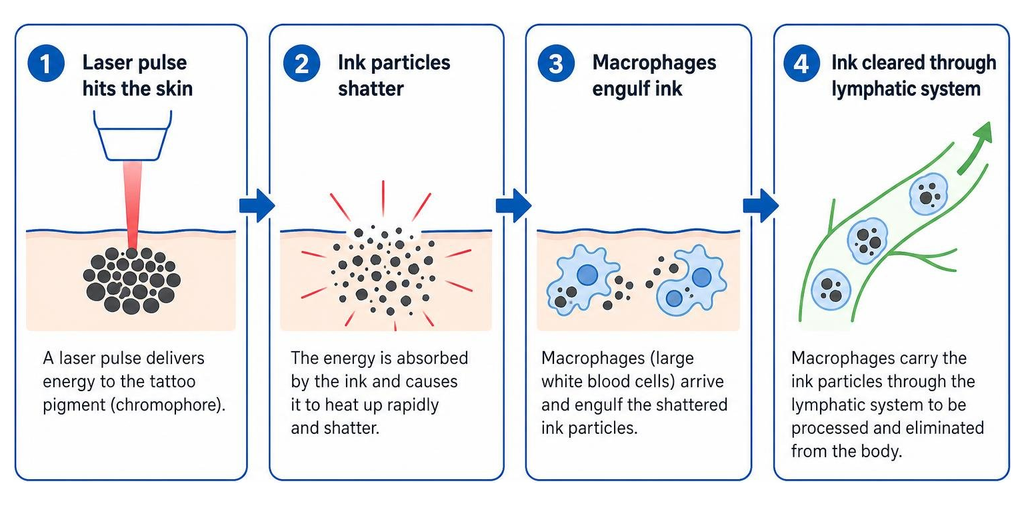
When a laser pulse hits the skin, it delivers a specific wavelength of light energy. This energy is absorbed by the tattoo pigment, which acts as the “chromophore.” Because the laser pulse is delivered in an incredibly short duration, the energy causes the ink particles to heat up rapidly and shatter. This process creates a photoacoustic shockwave—a mechanical effect that breaks large, dense ink clusters into tiny, dust-like particles.
Once the ink is fragmented, your body’s natural immune response takes over. Macrophages, which are large white blood cells, arrive at the site to engulf the shattered pigment. These cells then carry the ink particles through the lymphatic system, where they are eventually processed and eliminated from the body. This is why the process is gradual; your body needs time to perform this microscopic “housekeeping” after each treatment.
Laser Technologies and Target Wavelengths for Pigment Breakdown
Not all lasers are created equal, and the success of your treatment depends heavily on matching the right wavelength to the specific color of your tattoo. Because different ink colors absorb light at different frequencies, a “one-size-fits-all” laser simply does not exist.
Comparing Q-Switched and Picosecond Laser Tattoo Removal
For decades, Q-switched lasers were the gold standard. These devices deliver energy in nanosecond pulses. While effective, they rely primarily on a photothermal effect, which can sometimes generate more heat than necessary.
In recent years, picosecond lasers have revolutionized the field. These devices deliver energy in trillionths of a second. By operating at such extreme speeds, they rely more on the photoacoustic effect than the photothermal effect. This means they are often more efficient at shattering ink into smaller particles, which can lead to faster clearance and, in many cases, fewer total treatment sessions.
Wavelength Selection Across Tattoo Ink Colors
The wavelength of the laser determines how deep it penetrates and which colors it can target:
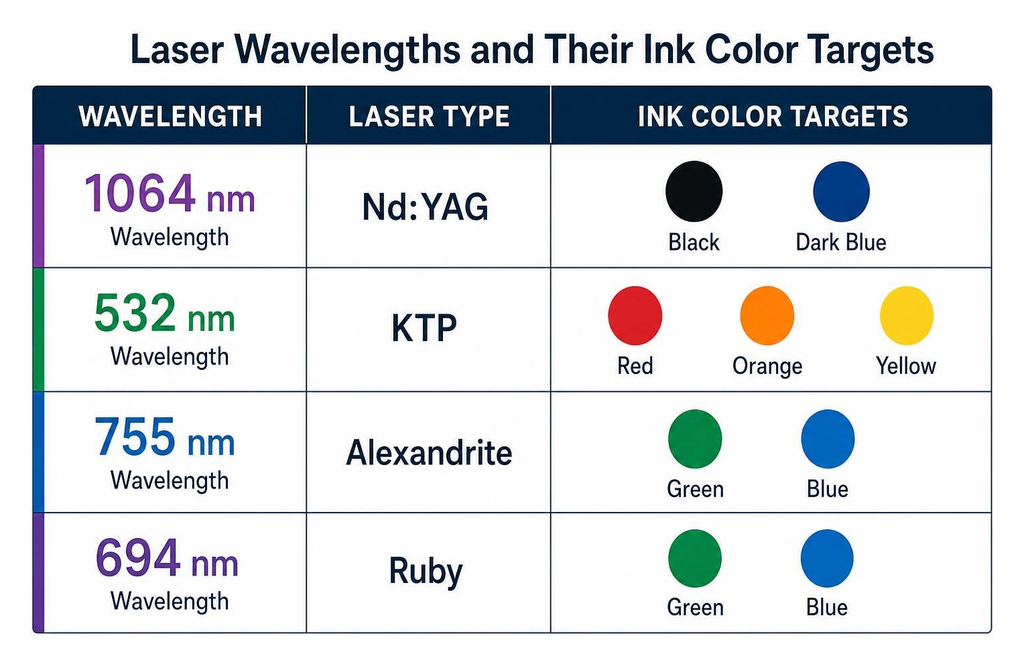
- 1064 nm Nd:YAG: This is the workhorse for black and dark blue inks. Its long wavelength allows it to penetrate deeply into the dermis, making it the safest and most effective choice for darker skin tones.
- 532 nm KTP: This shorter wavelength is ideal for warm tones, particularly red, orange, and yellow pigments.
- 755 nm Alexandrite: This wavelength is highly effective for green and blue inks, which are notoriously difficult to treat.
- 694 nm Ruby: Though less common today, this wavelength is sometimes used for specific shades of green and blue.
Determining Factors for Session Count and Clearance Rates
It is important to manage expectations regarding the timeline. While some patients see significant fading after just a few sessions, others may require a longer series of treatments. On average, most people need between 6 and 12 sessions to achieve significant clearance.
Several factors influence this:
- Ink Density and Depth: Professional tattoos are often deeper and more densely packed with ink than amateur tattoos.
- Tattoo Age: Older tattoos often have more stable, fragmented ink, which can sometimes be easier to clear than fresh ones.
- Anatomical Location: Areas with better blood flow and lymphatic drainage, such as the chest or back, often clear faster than extremities like the ankles or fingers.
- Immune Response: Because your body is responsible for removing the ink, your personal immune health plays a significant role in how quickly you see results.
Consistency is key. We typically recommend waiting 6 to 8 weeks between sessions. This interval allows your skin to fully heal and gives your lymphatic system the necessary time to flush out the ink particles mobilized by the previous treatment. Seeking professional laser tattoo removal ensures that your treatment plan is optimized for your skin type and tattoo characteristics.
Fitzpatrick Skin Types and Pigmentation Safety
Your Fitzpatrick skin type—a classification of how your skin reacts to sunlight—is a critical factor in laser selection. Patients with darker skin (Fitzpatrick types IV–VI) have higher concentrations of epidermal melanin. Because melanin also absorbs laser light, there is a higher risk of pigmentary changes, such as hypopigmentation (lightening) or hyperpigmentation (darkening).
For these skin types, we prioritize the 1064 nm Nd:YAG laser, as it bypasses the surface melanin to target the ink directly. A skilled practitioner will often perform a “test spot” in an inconspicuous area to observe how your skin reacts before proceeding with a full treatment.
Advanced Multi-Pass Protocols and Ink Characteristics
Some modern clinics utilize multi-pass protocols, such as the R20 or R0 methods. These techniques involve performing multiple laser passes during a single session, often using a specialized patch to clear the “frosting” (a temporary white layer of gas bubbles) that forms on the skin. This allows the laser to penetrate deeper into the ink without being blocked by the bubbles, potentially accelerating the clearance of stubborn, professional-grade tattoos.
Clinical Risks, Cosmetic Ink Complications, and At-Home Hazards
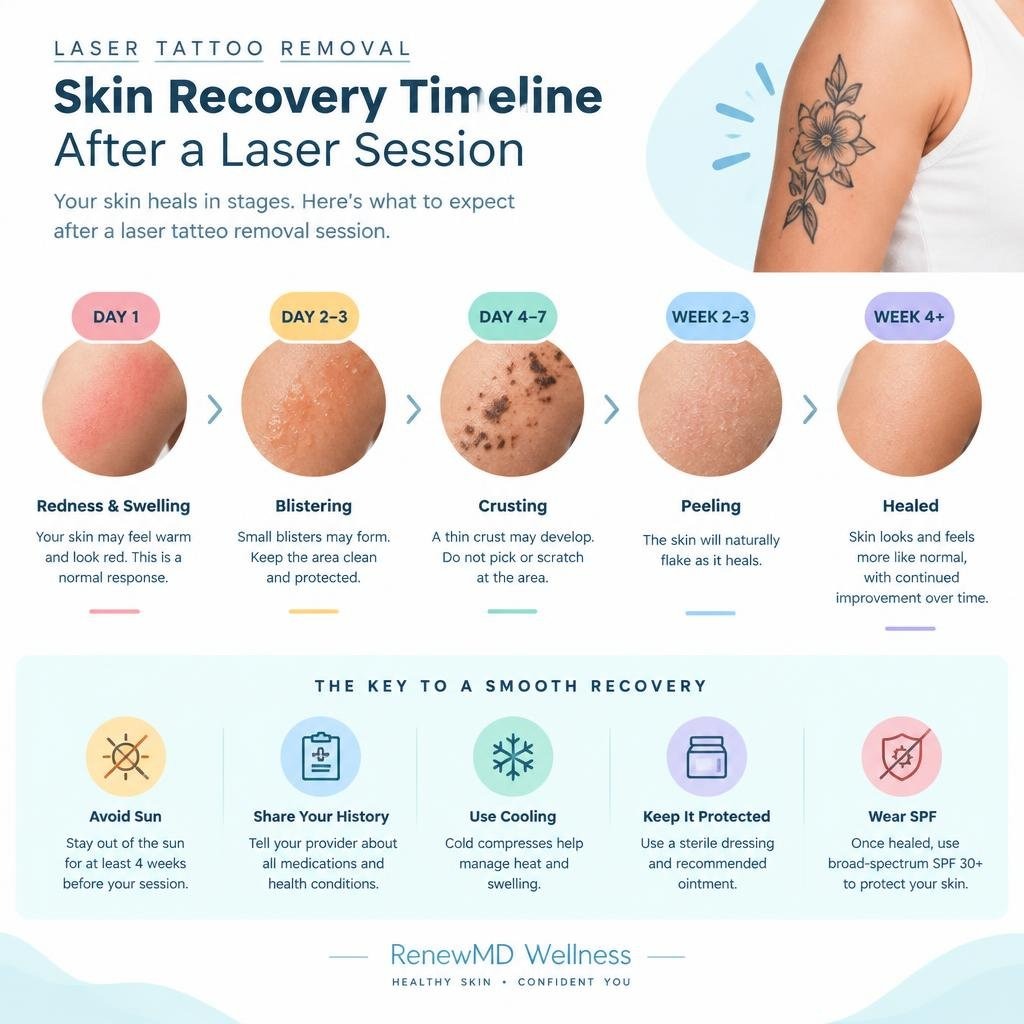
While laser removal is highly effective, it is a medical procedure that carries inherent risks. Common side effects include temporary redness, swelling, blistering, and crusting. In rare cases, if the laser settings are too aggressive or the practitioner is inexperienced, patients may experience permanent scarring, textural changes, or skin discoloration.
This is why we strongly advise against seeking treatment at non-medical spas or tattoo shops. A board-certified dermatologist or a highly trained laser specialist has the medical background to recognize complications immediately and adjust treatment parameters to ensure your long-term skin health.
Managing Cosmetic Tattoos and Paradoxical Darkening
Cosmetic tattoos (permanent makeup like lip liner or eyebrow microblading) present a unique challenge. Many of these inks contain titanium dioxide or iron oxide. When exposed to certain laser wavelengths, these compounds can undergo a chemical reaction that causes the ink to turn black or grey—a phenomenon known as paradoxical darkening. If you have permanent makeup you wish to remove, it is vital to disclose this during your consultation, as specialized test pulses are required to prevent this reaction.
Clinical Medical Oversight vs DIY Creams and Unregulated Devices
You may have seen “tattoo removal creams” or at-home laser pens sold online. It is crucial to understand that there is no clinical evidence supporting the efficacy of these products. In fact, many removal creams are essentially mild acids that can cause chemical burns, permanent scarring, and disfigurement. Similarly, unregulated at-home laser devices lack the cooling mechanisms and precision of medical-grade systems, posing a significant risk of severe burns. Always prioritize your safety by choosing professional, FDA-cleared equipment.
Essential Pre-Treatment Preparation and Post-Procedure Care
Your role in the removal process is just as important as the laser itself. Proper preparation and aftercare are the cornerstones of a successful outcome.
Preparing Your Skin for Laser Tattoo Removal Sessions
- Sun Avoidance: The most important rule is to avoid sun exposure on the treatment area for at least four weeks prior to your session. Tanned skin absorbs more energy, significantly increasing the risk of burns.
- Medical History: Be prepared to provide a full list of medications, as some can increase photosensitivity.
- Topical Numbing: If you are sensitive to pain, discuss the use of a topical lidocaine cream with your provider to be applied before your session.
Recommended Post-Treatment Healing Protocols
- Cooling: Use cold compresses to manage the heat and swelling immediately following your treatment.
- Ointment: Apply a sterile, non-stick dressing and a recommended ointment, such as petroleum jelly, to keep the area hydrated and protected.
- Blister Care: It is normal for blisters to form; do not pop or pick at them, as this increases the risk of infection and scarring.
- Sun Protection: Once the area is healed, continue to use broad-spectrum SPF 30+ whenever the area is exposed to the sun to prevent post-inflammatory hyperpigmentation.
Frequently Asked Questions
Does the removal process hurt more than getting a tattoo?
Most patients describe the sensation as being snapped by a hot rubber band. While it is uncomfortable, most people find it highly tolerable, especially with the use of skin-cooling devices and topical numbing agents.
Why are treatments spaced six to eight weeks apart?
The laser does not “erase” the ink; it merely breaks it into manageable pieces. Your body’s lymphatic system needs several weeks to transport these particles away. Rushing the sessions will not speed up the process and may increase the risk of side effects.
Can all tattoo ink colors be completely erased?
While black ink is the most responsive, modern technology has made it possible to fade almost any color. However, some bright colors (like certain shades of yellow or white) and complex multi-color tattoos may be more resistant and require more sessions. A realistic expectation is often that the tattoo will fade significantly, though complete “invisible” clearance is not guaranteed in every case.
Conclusion
The evolution of laser technology has transformed tattoo removal from a painful, scarring ordeal into a safe, precise, and effective medical procedure. By utilizing selective photothermolysis, we can help you reclaim your skin and move past unwanted ink.
If you are considering this journey, the most important factor is the expertise of your provider. A qualified professional will prioritize your safety, manage your expectations, and guide you through a personalized treatment plan. Whether you are looking to fade a tattoo for a cover-up or remove it entirely, take the time to schedule a professional consultation. Your skin is your largest organ—treat it with the care and expertise it deserves.
